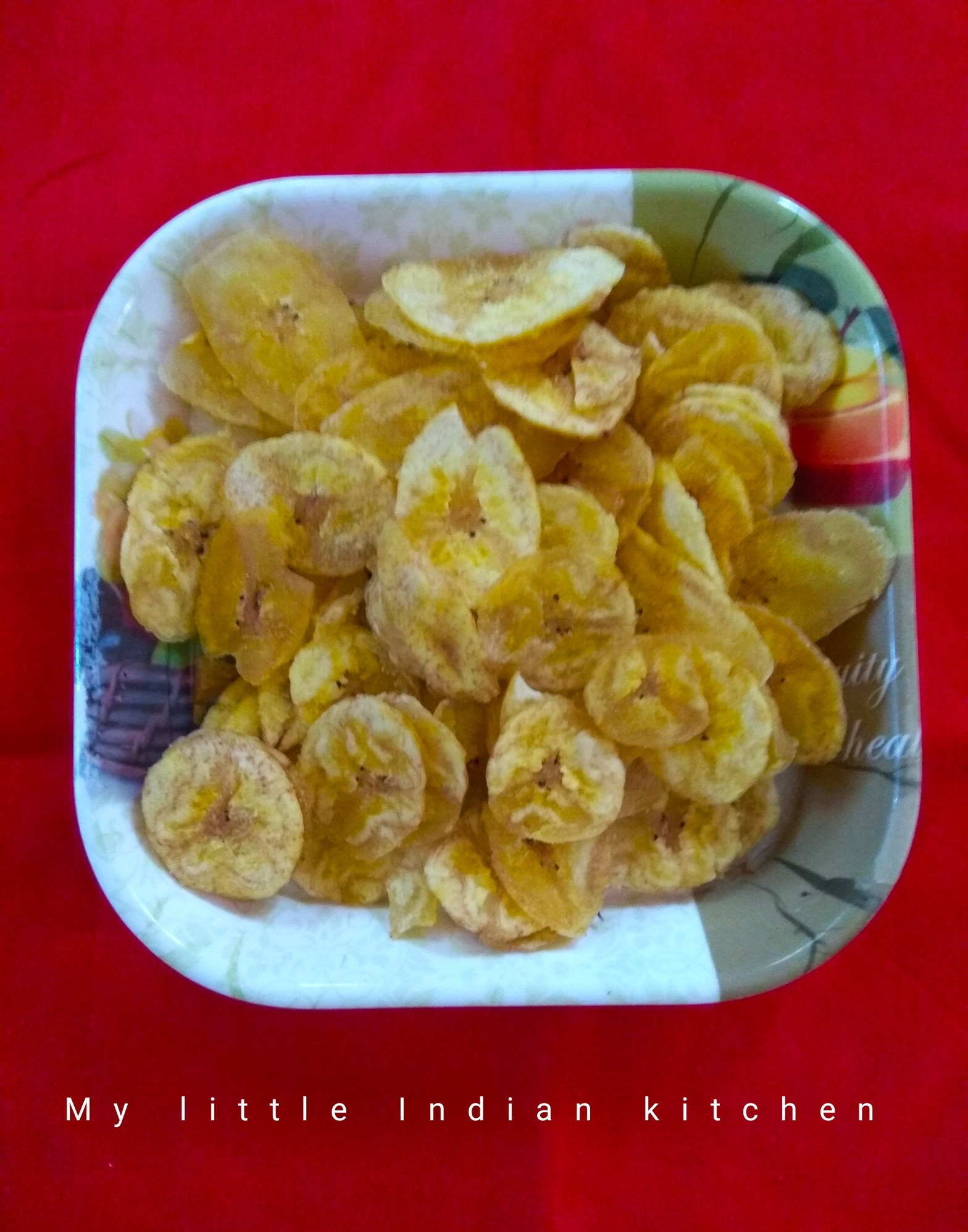
Kaya varuthathu | Banana chips | Ethakka upperi

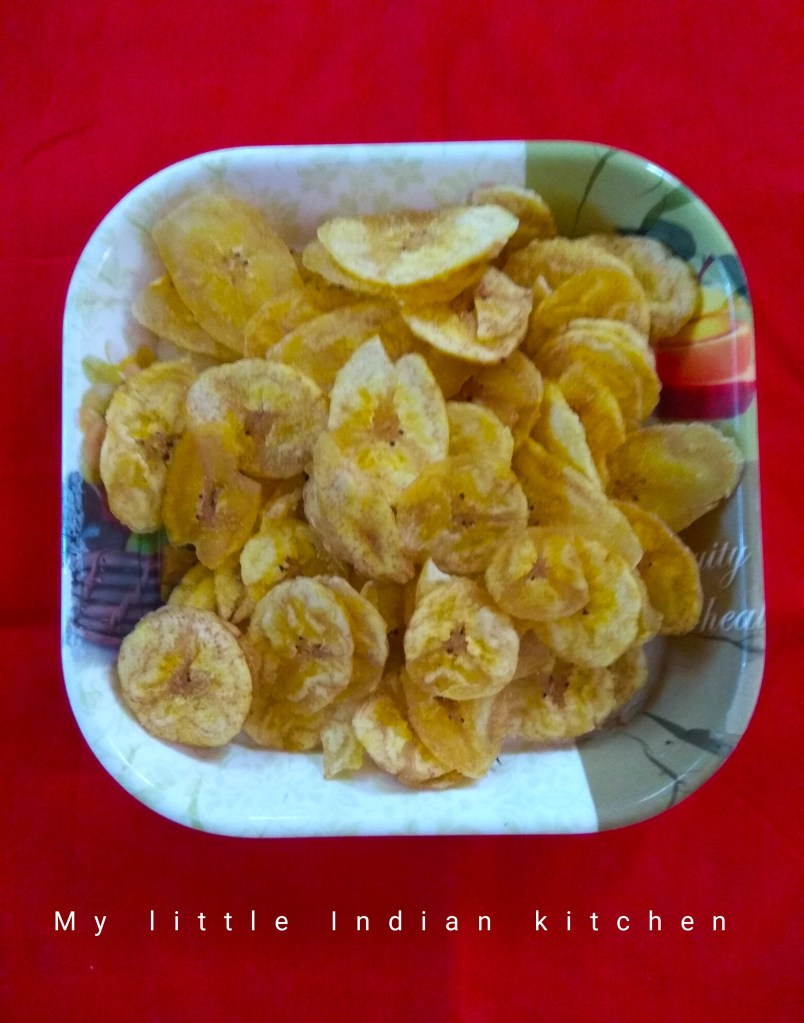
Banana chips are crispy tea time snacks made of Nendran Kaya, a variety of bananas popular across the state of Kerala. Mature raw bananas are separated from the bunch, peeled off its green skin. Long narrow fleshy part is passed through machines to get uniform sliced round banana pieces. Sliced banana pieces are fried in pure coconut oil, salt water is sprinkled in between for the unique flavor. Crispy banana chips with a hot steaming cup of tea is undoubtedly the most popular combination.
Ingredients

  • 4 raw banana/ethakaya
  • 1/4 tsp turmeric powder
  • salt to taste
  • 2.5 cups water
  • oil to deep fry

Method

  • Take two cups of water in a bowl and add half of the turmeric powder to it.Peel off the skin of the banana or plantain and soak it in the turmeric water for about 30 minutes.Take out the bananas from water and pat it dry.
  • Mix together salt and the remaining turmeric powder in water in a bowl. Set aside. Heat oil in a kadai on a medium flame. Cut the banana pieces with a knife or a slicer into thin round slices and put it into the oil.
  • Extra care should be taken to put the sliced banana pieces in batches otherwise it will get sticky to each other. Fry it until there is a crispy sound.
  • Now add the water mixed with salt and turmeric powder.This causes splashing of oil so be sure that either you stay away from the pan or cover the pan with a lid as soon as you sprinkle water over the chips.Stir and fry it again.
  • When all the water content in the chips evaporates, take it out from oil and drain the oil using a tissue paper.Once cooled, enjoy it with a cup of tea or coffee, or you can store it in an air-tight container.
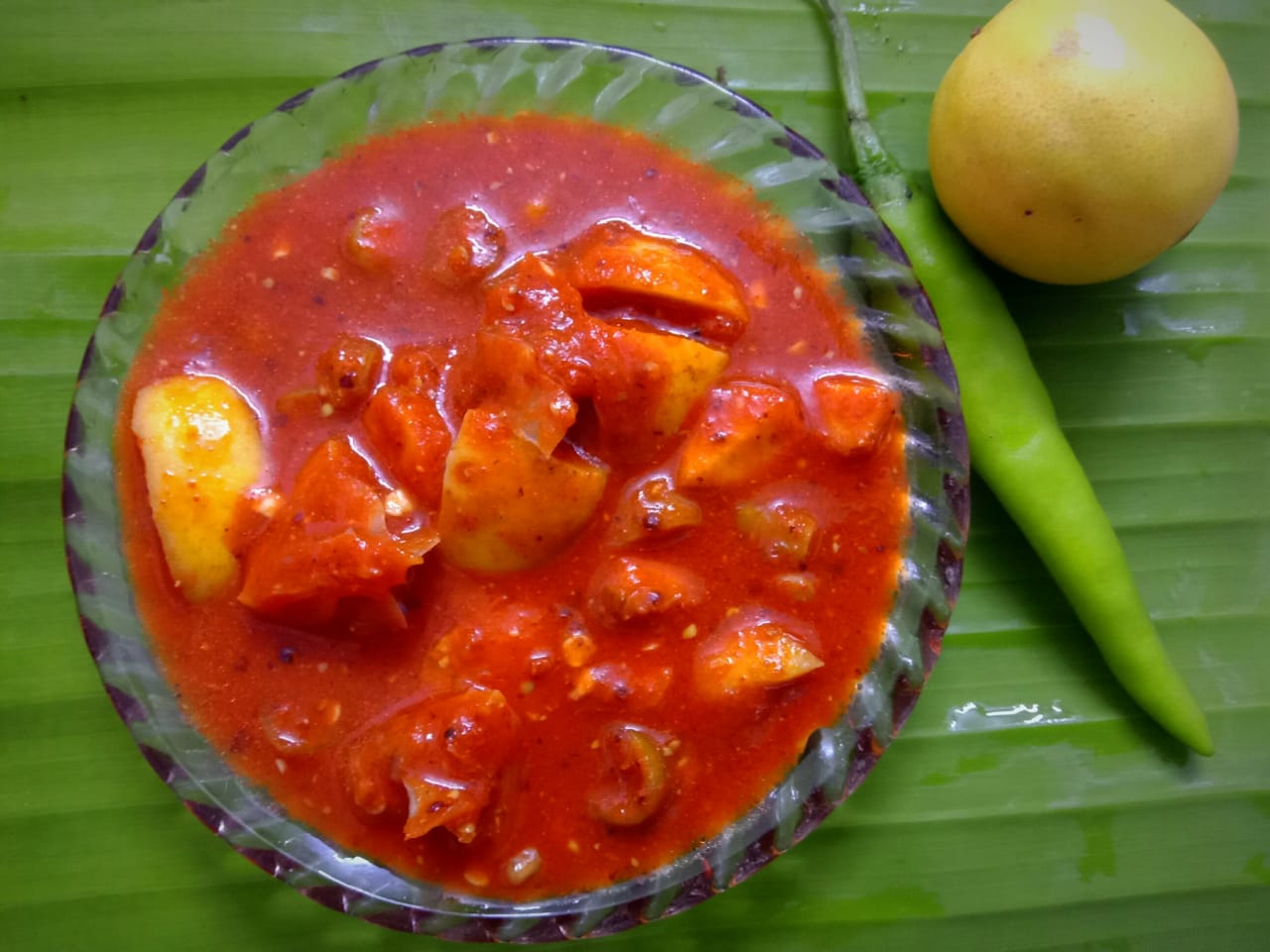
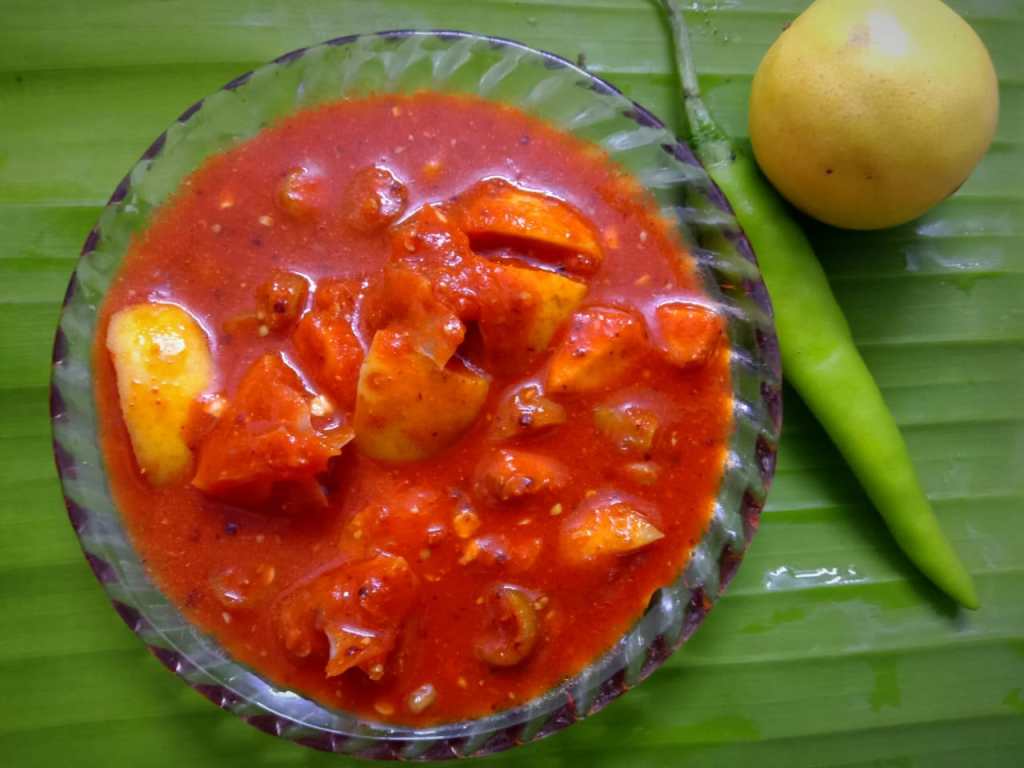
Lemon Pickle

Ingredients

  • 2 big lime, diced
  • 2 cups boiled water
  • 8-10 dry red chilies
  • 2-3 green chilies, chopped
  • salt to taste
  • 1″ piece ginger
  • 1 tsp mustard seeds
  • 1/4 tsp fenugreek seeds/methi
  • 2 tbsp coconut oil

Method

  • Dry roast mustard seeds and fenugreek seeds for a few seconds. Transfer into a bowl. In the same pan dry roast red chilies for few seconds.
  • Grind roasted mustard seeds, fenugreek seeds and dry red chilies into a fine powder. Set aside.
  • Boil water with salt and a pinch of sugar. Add lemon and allow it to boil.
  • Further, dice the lemon and transfer into a bowl.
  • Add the roasted powder, salt, asafoetida, and chopped green chilies and ginger.
  • Further, add water to get a semi thick consistency. Pour coconut oil and serve.

Kootu curry

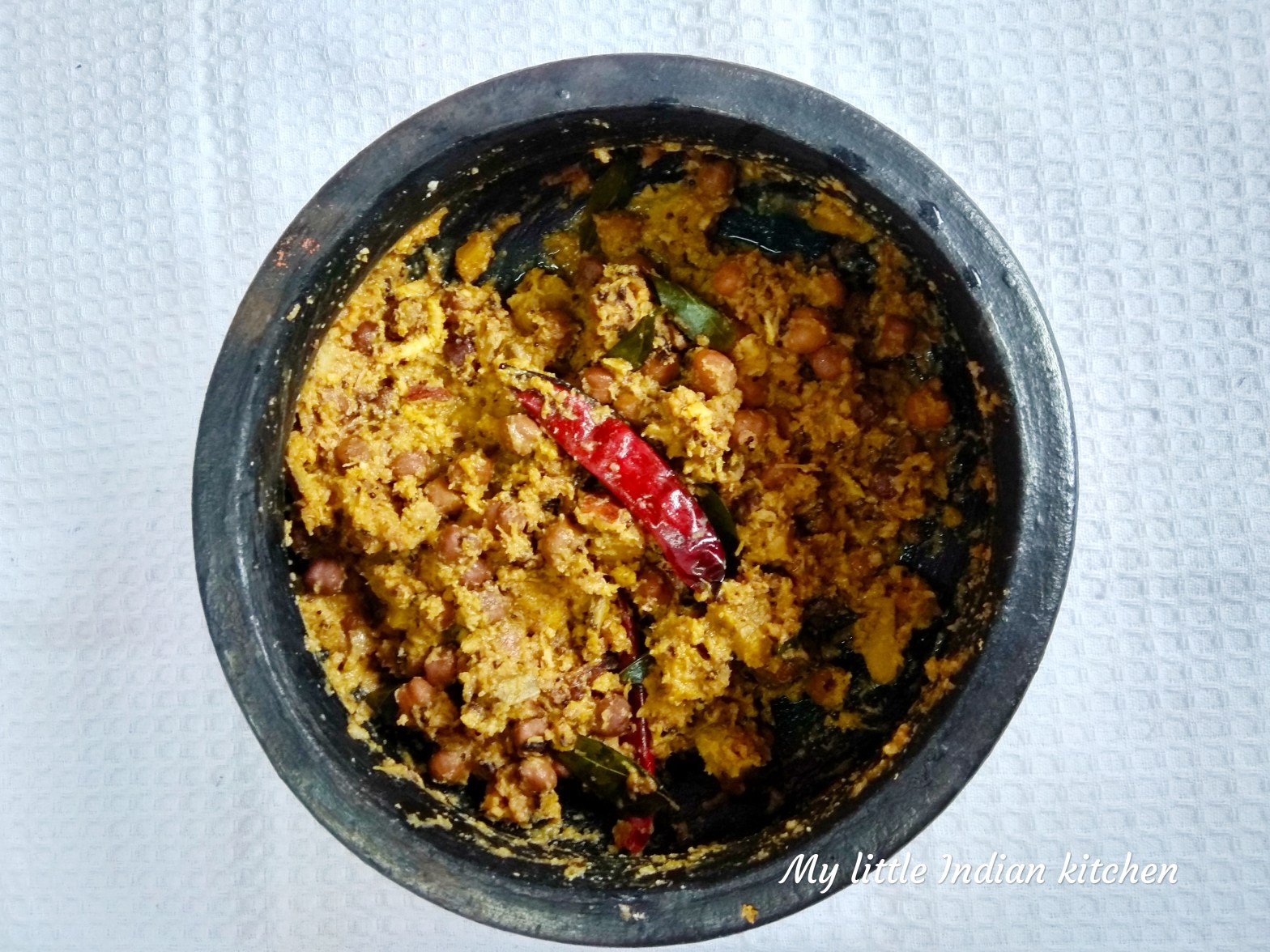
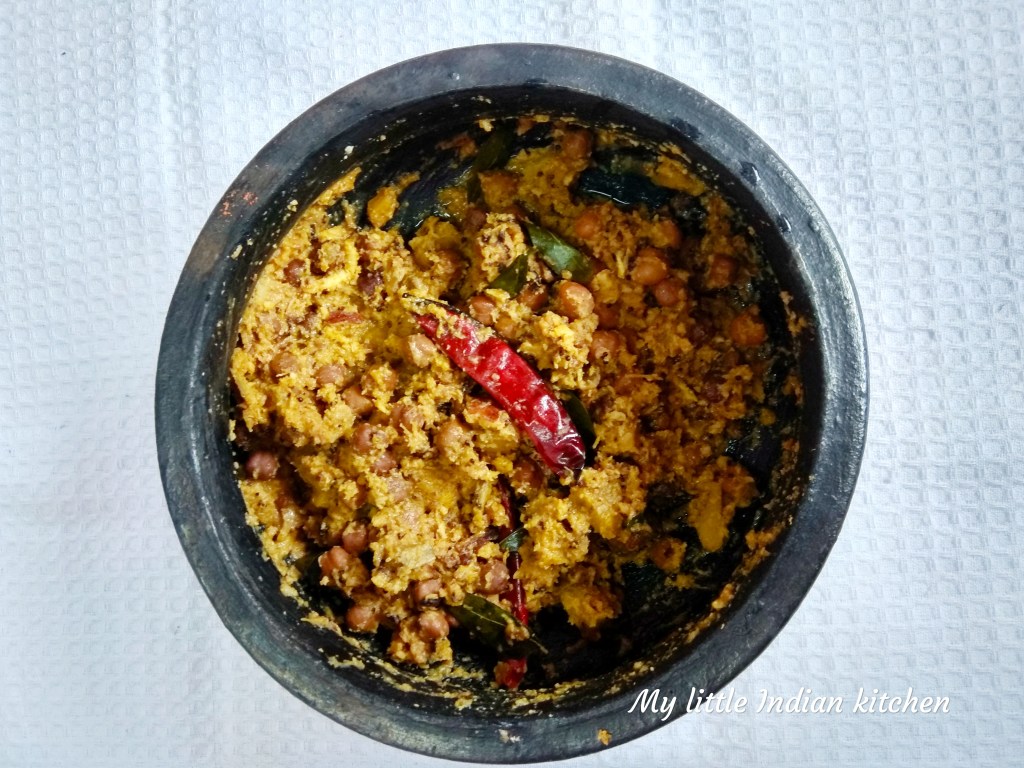
Kootu Curry is a traditional side dish served mostly for festivals & celebrations in Kerala, like Onam, Vishu, and marriages. Along with the endless curries served in a Sadhya kootu Curry makes its presence unique by being the only curry which uses roasted coconut as a topping. The word kootu means a mix or combination, and the recipe is a mix of different vegetables and chickpeas simmered in a coconut cumin gravy, and later topped with fried coconut.

Ingredients

  • 1 cup black chickpeas/kadala/chana
  • 1 medium sized raw plantain, cubed
  • 1 cup yam, cubed
  • 1 tsp chili powder
  • 1/2 tsp turmeric powder
  • 1/2 cup + 1/2 cup grated coconut
  • 1/2 tsp cumin seeds
  • 1 tbsp pepper powder
  • 1 tbsp grated jaggery
  • 2 springs curry leaves
  • 2 dry red chilies
  • 1 tsp mustard seeds
  • coconut oil (as required)
  • salt to taste

Method

  • Soak black chickpeas overnight. Pressure cook for 3 whistles. Drain water and cooked black chick peas separately and keep aside. Grind 1/2 cup grated coconut with cumin seeds to a coarse paste, set aside.
  • In a separate pan, add drained water, vegetables, turmeric powder, chili powder, & salt, and cook it on a low flame until veggies are soft and the water dries out.
  • Lightly mash the cooked vegetables with the back of a spoon. Add the cooked black chickpeas and ground coconut paste, mix well.
  • Now add pepper powder and jaggery to the pan, mix well and cook for another 2-3 minutes, and then switch off the flame.
  • Heat oil in a separate pan and splutter mustard seeds. Add curry leaves, dry red chilies and grated coconut. Roast the coconut until they turn golden brown.
  • Pour this over the cooked veggies and chickpeas, mix well. Serve hot with rice.

Kalan | Kurukku kalan

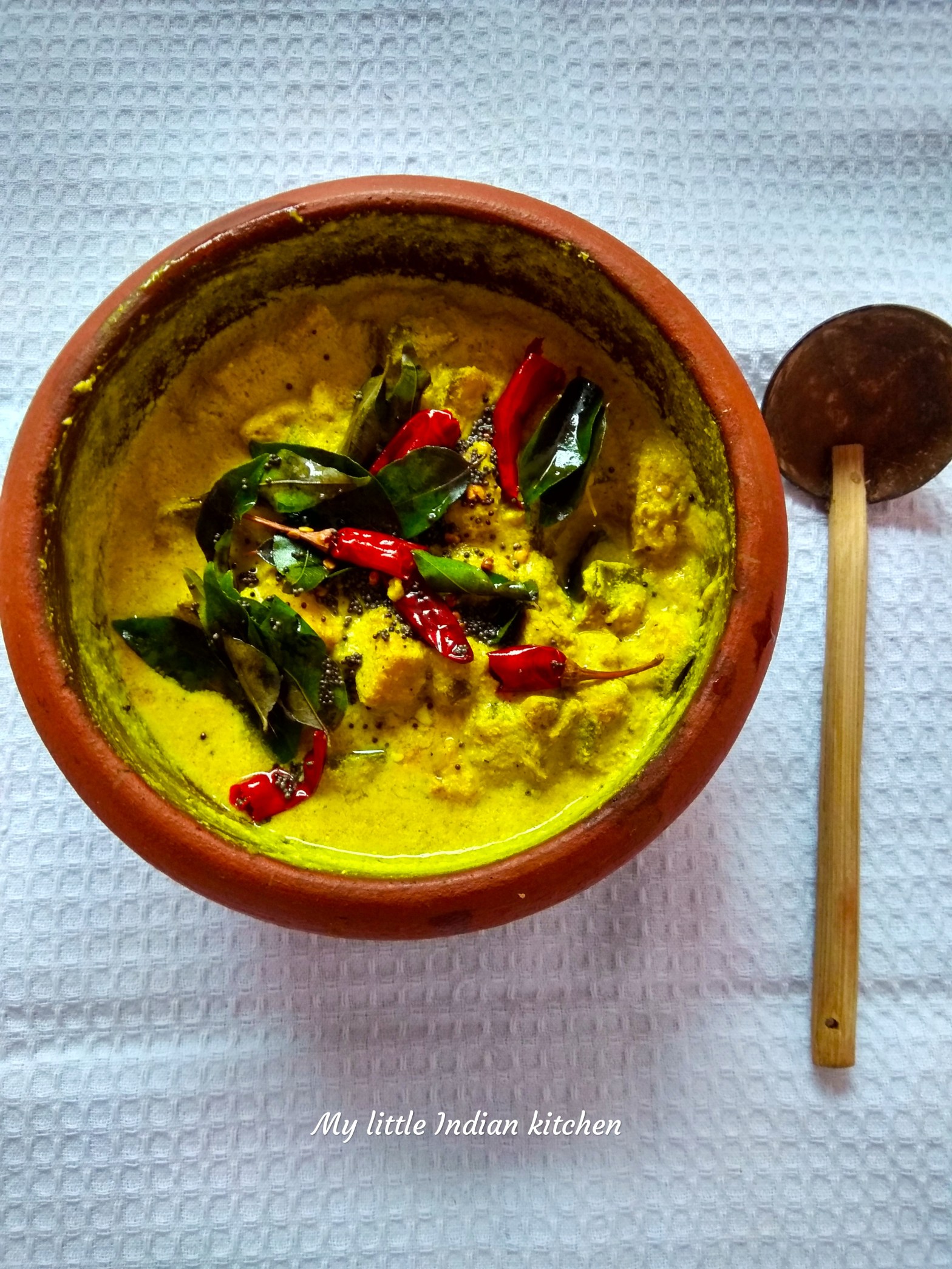
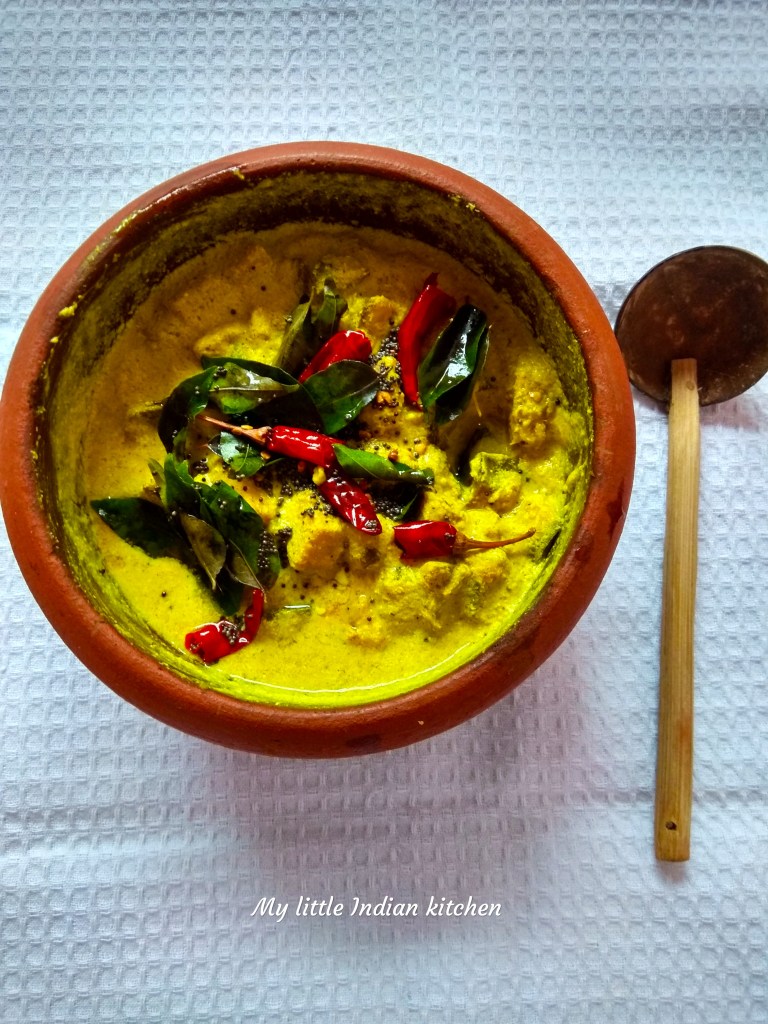
Kalan/kurukku kalan is a delicious side dish made of yam and raw banana. It is little thick in consistency and has a smooth,silky texture. This can be prepared and stored for about a week. Since its gets thick with time it is mostly prepared the previous day of sadhya.

Ingredients

  • 1 cup yam chopped
  • 1/2 cup raw banana/plantain
  • 2 tbsp pepper powder
  • 1 tsp turmeric powder
  • 1 cup freshly grated coconut
  • 1/2 tsp cumin seeds
  • 3 green chilies
  • 1/2 litre curd
  • 2 spring curry leaves
  • 1 tbsp ghee
  • salt to taste
  • 1 tbsp coconut oil

for tempering :

  • 1 tbsp coconut oil
  • 1 tsp mustard seeds
  • 1/2 tsp fenugreek seeds
  • 1 dry red chilli, broken
  • 1 spring curry leaves

Method

  • Firstly, dissolve pepper powder and turmeric powder in water. Set aside. Whisk curd till smooth and keep it aside. Grind together coconut, green chili and cumin seeds into a fine paste. 
  • Into a heavy bottomed pan, strain the pepper turmeric water, boil for 2 minutes on high flame. Now add chopped yam and plantain. Cook until the vegetables are soft.  
  • On a low flame, add coconut paste, salt, whisked curd and mix well. Stir continuously for 5 minutes or until it thickens. Switch off when the kalan heats. Do not boil.  
  • Heat coconut oil in a separate pan and splutter mustard seeds, fenugreek seeds, red chilli, curry leaves. Pour it over the kalan and mix well.  
  • Close it with a lid and let it sit for 10 minutes for the flavors to absorb.

Puli inji

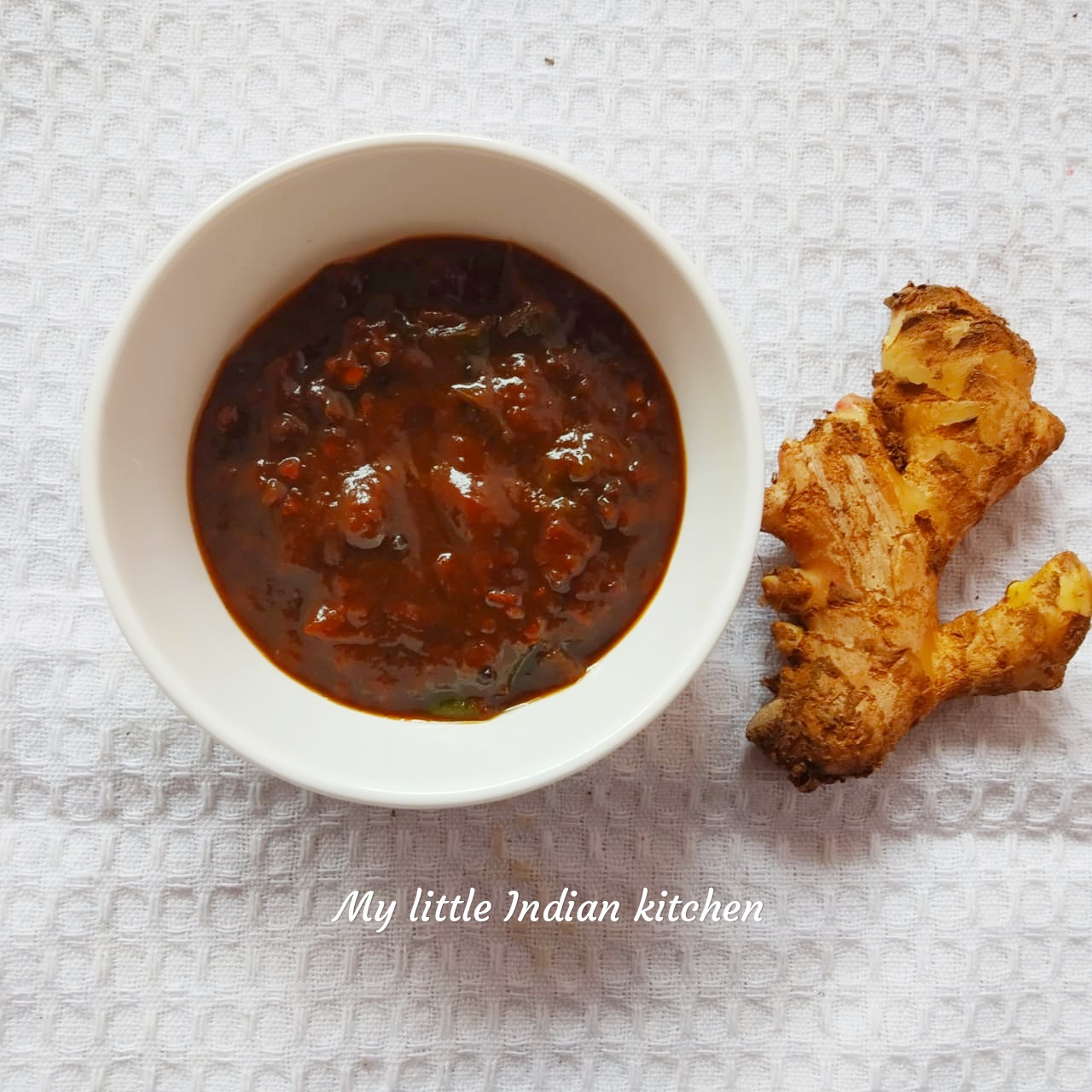
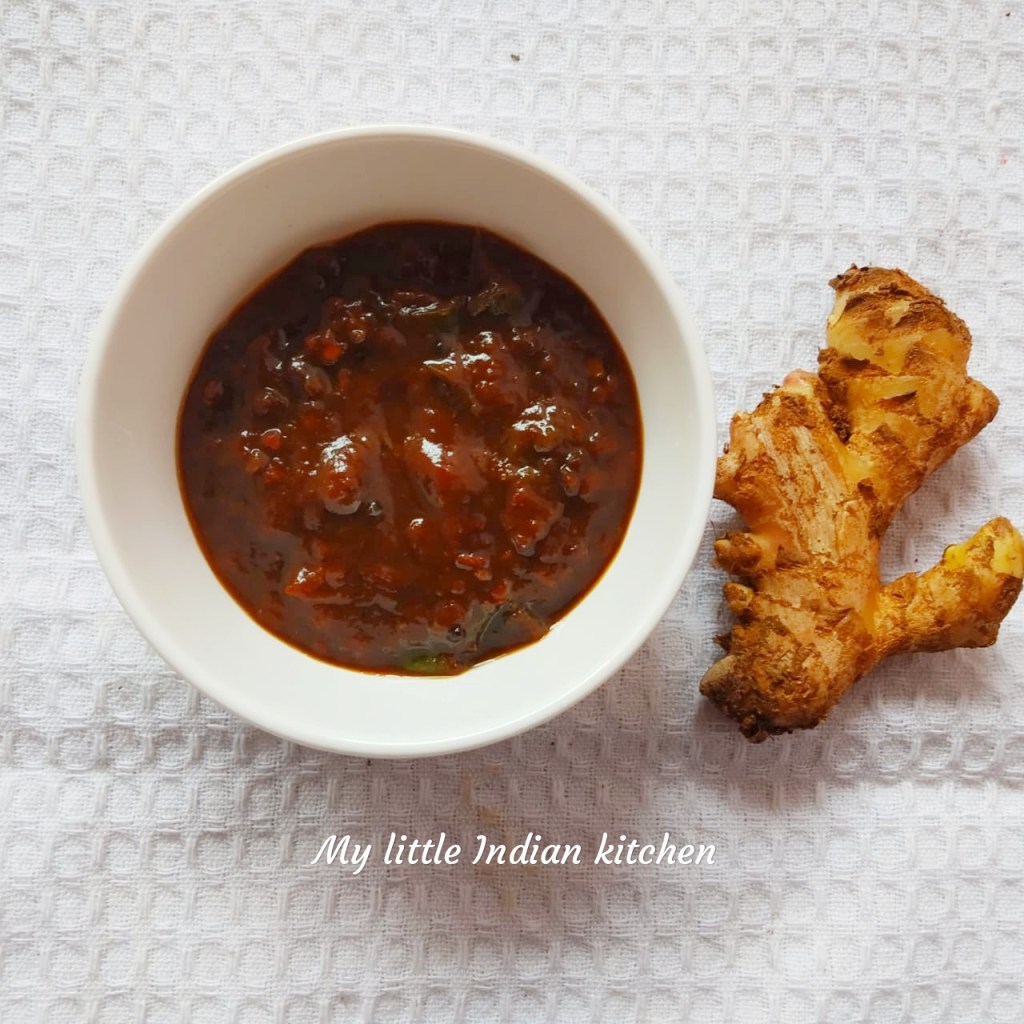
Inji Puli (Inji Curry/Puli Inji) is popular side dish served during any Kerala feast/sadhya. It has a perfect blend and balance of sweet, salt, hot and sour elements and is prepared by a combining ginger, green chili, tamarind and jaggery.

Ingredients

  • 1/2 cup ginger, finely chopped
  • 3 Green Chili, finely chopped
  • 1 dry red Chili
  • 1 gooseberry size tamarind
  • 2 tbsp oil
  • 1 tsp mustard seeds
  • 1 spring curry leaves
  • 1/2 tsp turmeric powder
  • 2 tbsp grated jaggery
  • salt to taste

Method

  • Soak the tamarind in 1/2 cup water and extract the juice, set aside.
  • Heat oil in a heavy bottomed pan and add the mustard seeds.
  • Next, add the red chili, chopped ginger, green chilies and curry leaves. Fry until the ginger becomes light golden brown.
  • Add the tamarind water to the pan. Also add turmeric powder, salt and simmer until the tamarind water evaporates and the mixture becomes thick.
  • Once the mixture becomes thick, add grated jaggery, mix well and switch off the flame. puli inji (inji puli) is ready to serve. You can refrigerate and use it for up-to two weeks.

Avial

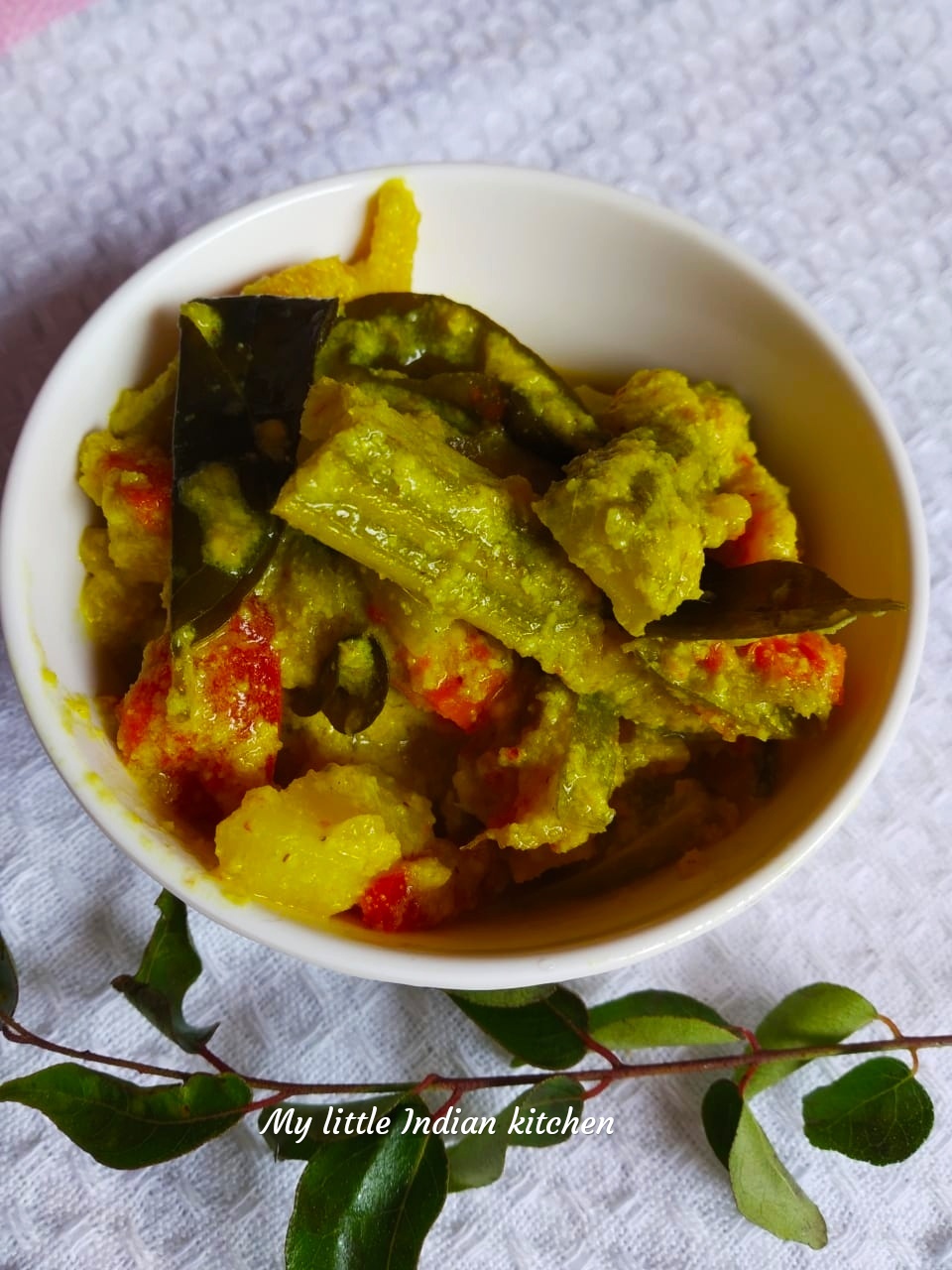
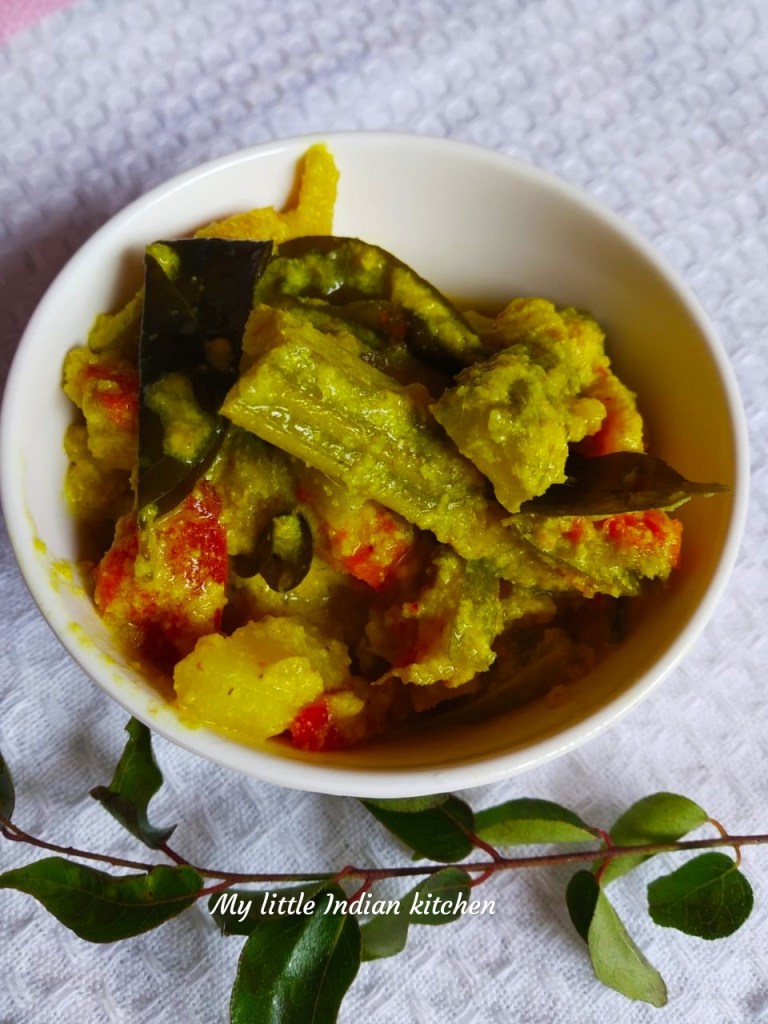
Avial is a mixture of vegetables and coconut along with raw mango, tamarind extract or curd for tanginess, seasoned with coconut oil and curry leaves. It is very healthy and nutritious since it contains a lot of vegetables. It is really easy to prepare avial but the vegetables need to be cooked to the correct consistency, tanginess should be perfect and the grated coconut needs to be crushed perfect to get this delicious avial. The coconut oil added in the end gives it an extraordinary aroma and taste so please do not skip adding coconut oil. An authentic Kerala sadhya is incomplete without avial.

Ingredients

  • 4 cups vegetables,cut into thin long pieces.
    • (I used raw plantain, elephant yam(chena),cucumber,snake gourd, drumstick,carrot, winter gourd,brinjal,tomato)
  • 3 -4 green chilies, slit
  • 1 tsp turmeric powder
  • 1/2 of a small raw mango, sliced (add depending on how sour it is)
  • 1.5 cup freshly grated coconut
  • 1/2 tsp Cumin seeds
  • 2-3 shallots/pearl onion
  • 2 – 3 spring curry leaves
  • salt to taste
  • 3 tbsp coconut oil

Method

  • Cut the vegetables into thin long pieces. Cover and cook the vegetables adding enough water (around 1/2 cup) along with slit green chilies and turmeric powder.
  • Do not add too much of water since cucumber and winter melon are watery vegetables.When the vegetables are 3/4th cooked add the green mango pieces,cover and cook.
  • Meanwhile crush the grated coconut adding pearl onions and cumin seeds. When the vegetables are done, on a low flame add the crushed coconut paste and mix well.
  • Be careful not to break the vegetables. If you are using curd (around 1/4 cup) add it now. Switch off.
  • Add around 3 tbsp of coconut oil and some curry leaves. Cover with the lid and let it remain for 30 minutes. Mix well. Serve hot with rice.

Notes:

For vegan version, skip curd.

Patharvodo

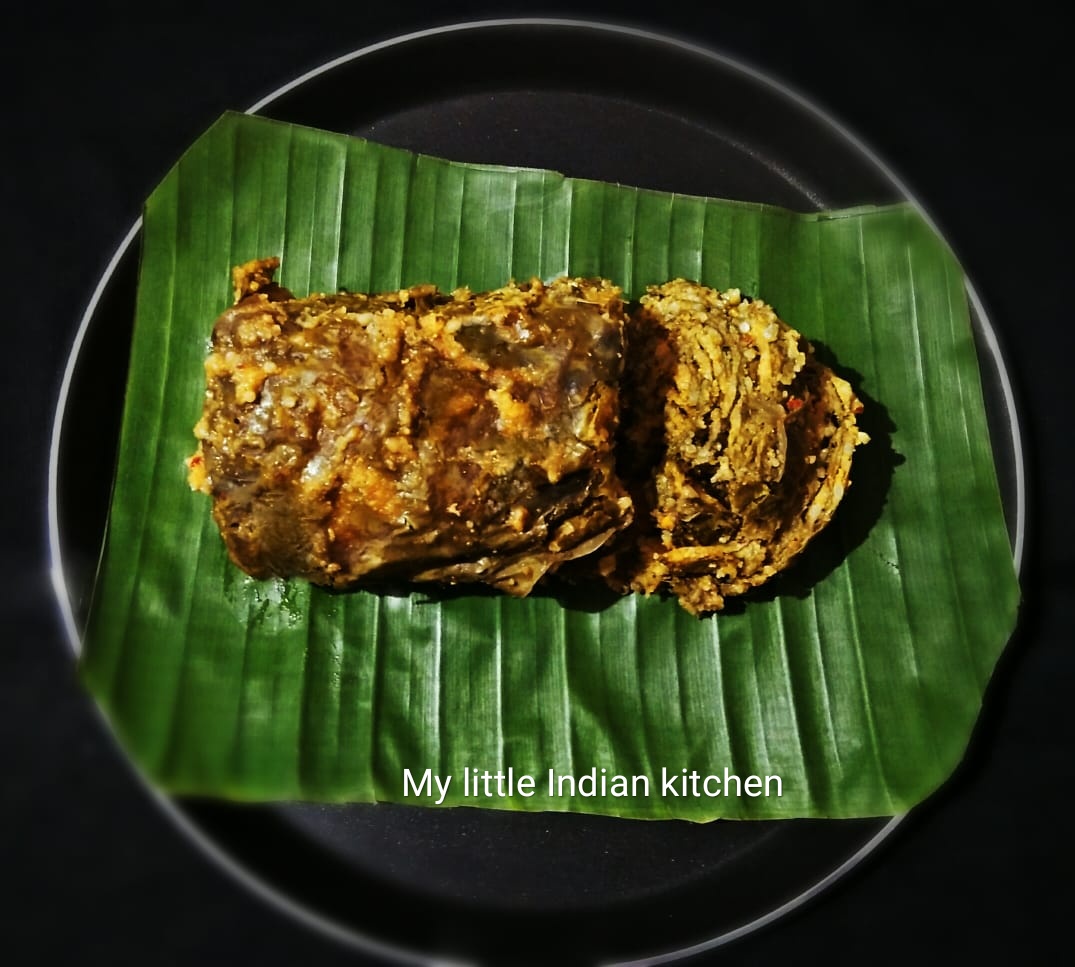
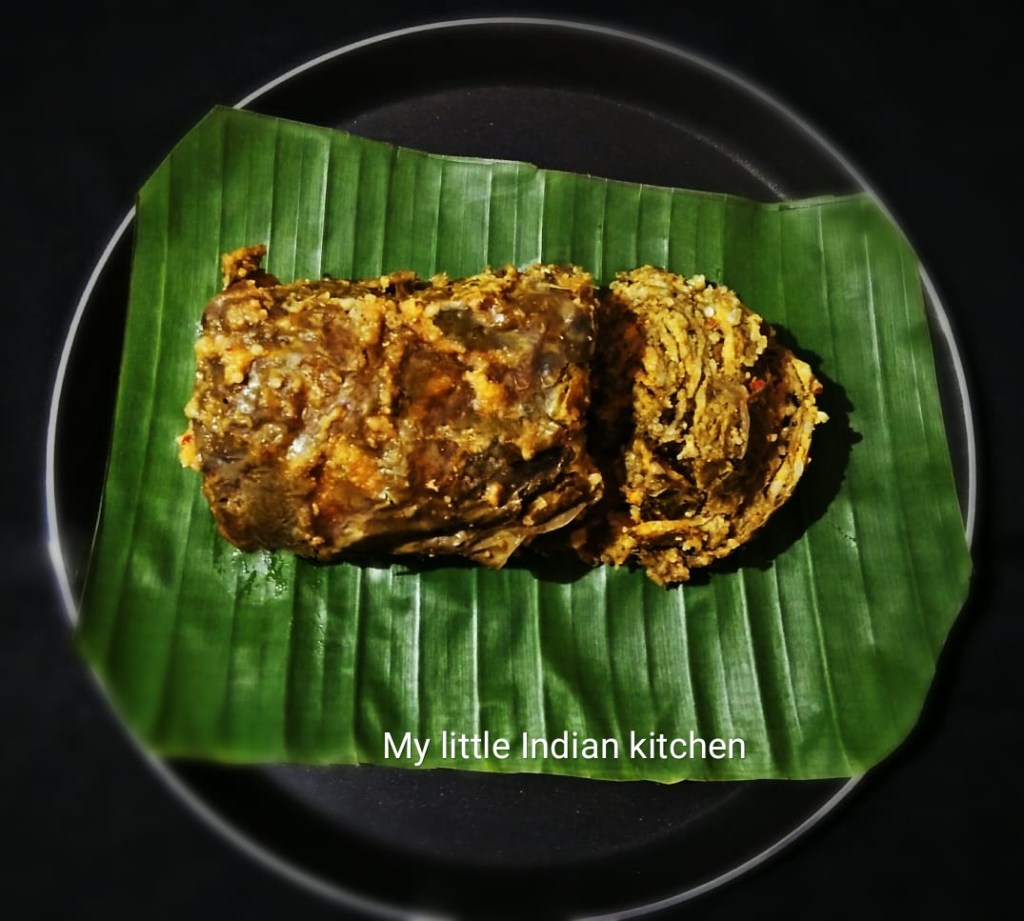
Patharvodo is an all time favorite delicacy from Konkani cuisine. This dish can be relished for breakfast, as an evening snack or even as a whole meal for dinner. Patharvodo are steam cooked hence they are healthy. Since it is so delicious and popularly accepted, it is even served as a premium snack during family get-together, special functions/ events. Patharvodo is best served with coconut oil. It can also be sliced and roasted in a frying pan to make it a crispy evening snack.

Ingredients

  • 10-12 tender taro /colocasia leaves
  • 4 cups raw rice
  • 1.5 cup grated coconut
  • 7-8 dry red chilies
  • 1 tsp turmeric powder
  • 1 tsp asafoetida (hing)
  • 3 tbsp tamarind pulp
  • salt to taste

Method

  • Soak raw rice for 4-5 hours. Drain water and grind rice along with grated coconut,red chilies, turmeric powder, salt and tamarind pulp into a coarse paste. set aside.
  • Clean the taro/colocasia leaves thoroughly. Cut the stem of the leaves. Slide a sharp knife along the thick veins of the leaves so as to peel off all the tough parts of the leaf. Be careful not to tear the leaves.
  • Next lay a large leaf on a plate and spread the batter lavishly and evenly on the leaf. Now layer another leaf over it, again spread the batter covering the entire area of the leaves.
  • Add 4-5 layers similarly, applying the batter. Place the smaller leaves adjacently to cover the area. Further, start rolling from the left side all the way through. Ensure rolls are completely sealed.
  • Start rolling slowly so that a cylindrical roll is formed and tie it with a thread to prevent opening. Repeat the same process with the remaining leaves to form the second roll.
  • Add sufficient water in the steamer. Coat a little batter on the outer surface of the rolls as well and place it in a steamer.
  • After 45 -50 minutes of steaming, check if the rolls are fully done. Poke a toothpick into the rolls and check if it comes out clean. If it comes out clean it is done, else steam it for some additional time.
  • Serve these steaming hot patharvodo with generous amount of coconut oil.

Notes :

The Patharvodo can be stored for 2-5 days as it is prepared in bulk. From 2nd day onward it can be sliced and roasted in a frying pan with some coconut oil.

Nadan kadala curry

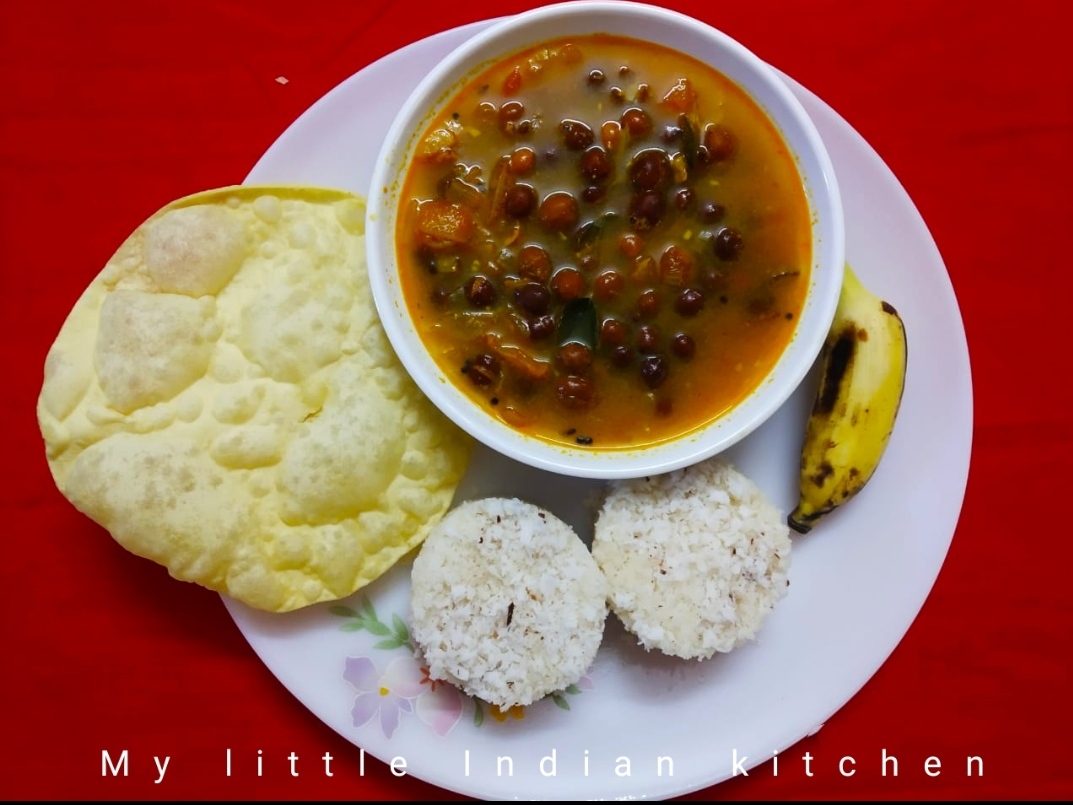
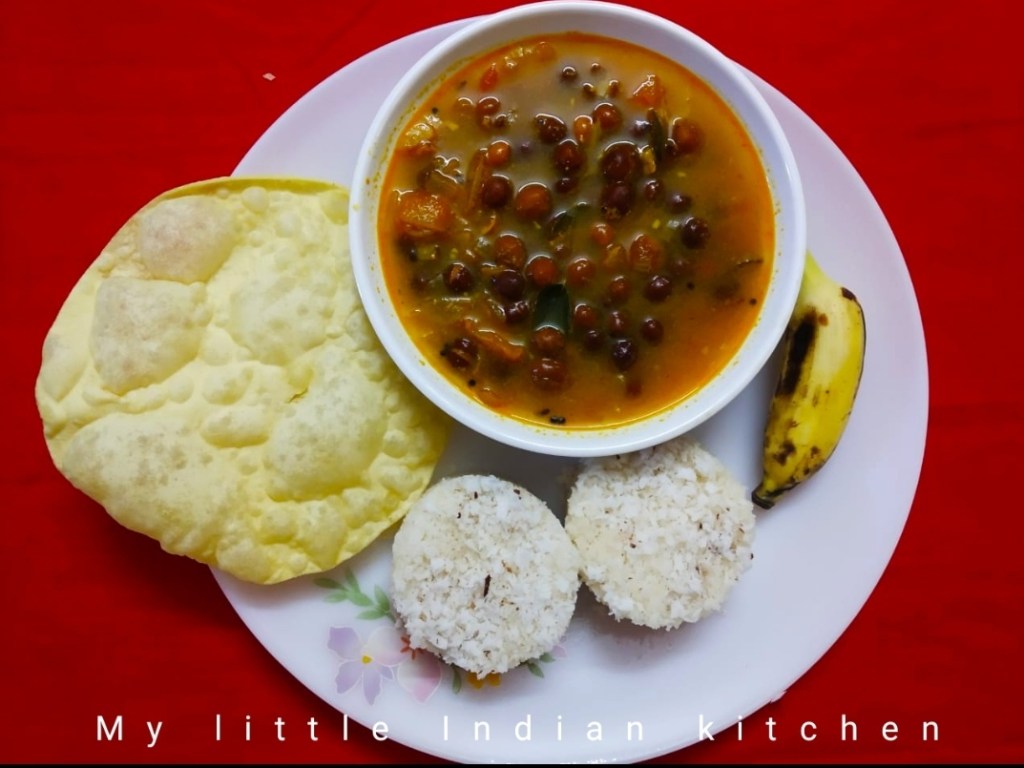
Nadan kadala curry is an quintessential Kerala style dish prepared with black peas cooked in a rich coconut gravy. It is a popular dish and is best served with puttu. Nadan kadala curry can also be had as a side dish with appam, dosa, idiyappam or string hoppers, paratha and boiled red rice.

Ingredients

  • 1 cup brown chick pea (kadala/chana)
  • 1 tbsp ginger garlic paste
  • 1 medium onion, finely chopped
  • 2 green chilies, slit
  • 1 tomato, finely chopped
  • 1/2 cup freshly grated coconut
  • 1 tsp chilli powder
  • 1 tsp black pepper powder
  • 1.5 tsp coriander powder
  • 1/2 tsp turmeric powder
  • salt to taste
  • 1 tbsp finely chopped coriander leaves

for tempering :

  • 2 tbsp coconut oil
  • 1/2 tsp mustard
  • 1/2 cup finely chopped shallots/pearl onion
  • 1 strand curry leaves
  • 2 dry red chilies

Method

  • Soak chick pea overnight or for 5-6 hours. Pressure cook for 4 – 5 whistles or until soft with a little salt and just enough water.
  • Grind coconut and 3 pods of garlic into a smooth paste by adding 2 tbsp water. Set aside.
  • Heat oil in a kadai, add ginger garlic paste and chopped onion sauté until the onion turn light brown. Add salt, red chili powder, turmeric powder, coriander powder, pepper powder and fry for few seconds on a low flame.
  • Next add chopped tomatoes sauté for few seconds. Further add cooked chana or kadala along with the water. Take a ladle of cooked chana, grind it to a coarse paste and add it to the gravy to get a thick consistency. Cover and cook for another 5 minutes.
  • For tempering, Heat oil in a separate pan, splutter mustard seeds, and fry shallots until golden brown. Also add curry leaves and dry red chilies. Pour it over the curry.
  • Garnish with coriander leaves and serve hot with puttu or chapati

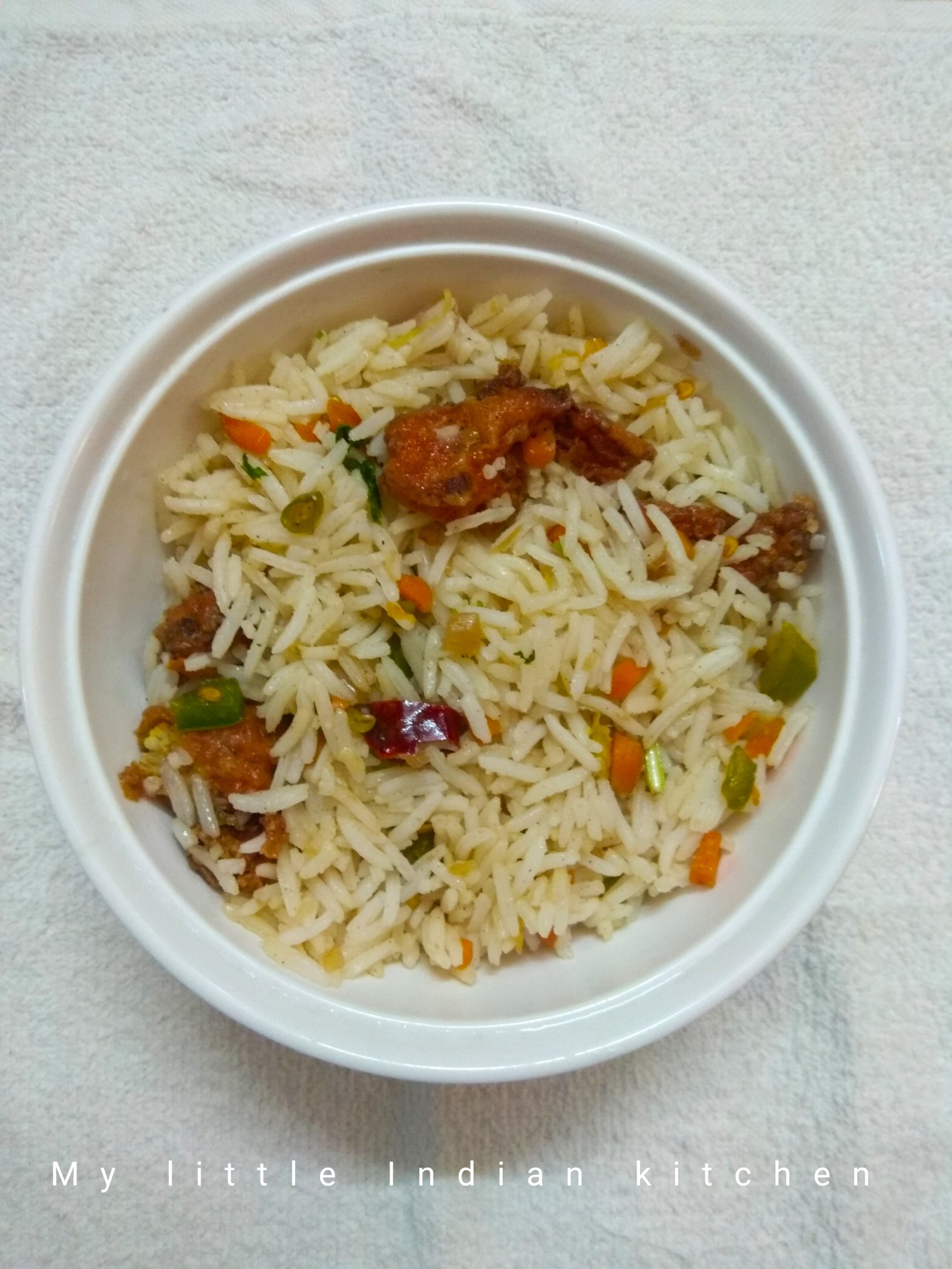
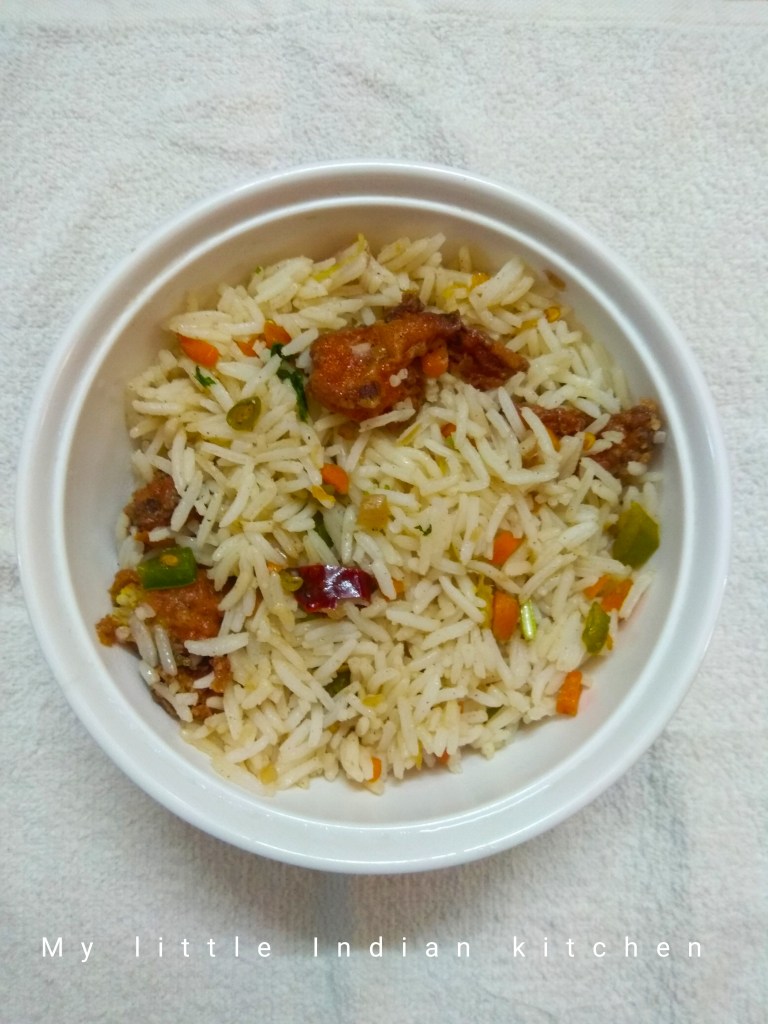
Gobi fried rice

Gobi Fried rice is a delicious Indian street food. This Indo Chinese food is prepared by combining perfectly cooked rice, deep fried cauliflower florets, crunchy veggies and sauces. Unlike the normal fried rice, gobi fried rice is hot and spicy with the bursting flavor of ginger, garlic, soy sauce and red chili sauce. It is quite popular and is most ordered in Indo Chinese restaurants.

Serves : 2

Ingredients

  • 2 cups basmati rice
  • 1 medium cauliflower,separated into florets
  • 1 medium onion, finely chopped
  • 1/4 cup carrot, thinly sliced
  • 1/4 cup cabbage, thinly sliced
  • 1/4 cup capsicum, thinly sliced
  • 1/4 cup beans, thinly sliced
  • 1 tbsp ginger garlic paste
  • 1 tsp red chili sauce
  • 2 tsp tomato sauce
  • 1 tsp soy sauce
  • 1/2 tsp red chili powder
  • 1 tsp black pepper powder
  • 2 dry red chilies, finely chopped
  • 1/4 chopped coriander leaves
  • salt to taste
  • 2 tbsp ghee

For frying cauliflower

  • 1/4 cup all purpose flour or maida
  • 1/4 cup corn flour
  • 1 tsp Kashmiri red chili powder
  • 1/2 tsp pepper
  • oil to deep fry
  • salt to taste

Method

for cooking rice :

  • Wash and soak the rice. Cook the rice separately in a deep bottomed pan. Cook on a low flame until the rice is perfectly cooked and fluffy. Discard excess water and keep aside to cool completely.

for frying cauliflower :

  • In a bowl, add all purpose flour, corn flour, red chili powder, black pepper powder and salt. Add water little by little and make a thick batter. Mix well.
  • Drop the florets and mix gently till they are coated with the batter.
  • Heat oil in a pan. Drop the batter dipped florets into the oil and deep fry till they are crisp and crunchy.
  • Do it in batches for even cooking. Drain into a kitchen paper and let it cool completely. Set aside.

for gobi fried rice :

  • Heat ghee in a pan. Saute onion,chopped red chilies and ginger garlic paste for few seconds.
  • Cooking over high flame add carrots, beans saute for a few seconds. Further add cabbage and capsicum, saute for another few seconds.
  • Next add soy sauce, red chili sauce and tomato sauce and mix well.
  • Add fluffed up basmati rice, salt, black pepper powder and toss well on a low flame.
  • Further add deep fried cauliflower florets while the rice gets heated up. Combine well. This should take around 2 minutes.
  • Garnish with coriander leaves. Serve gobi fried rice with sauce or raita or any curry of your choice.

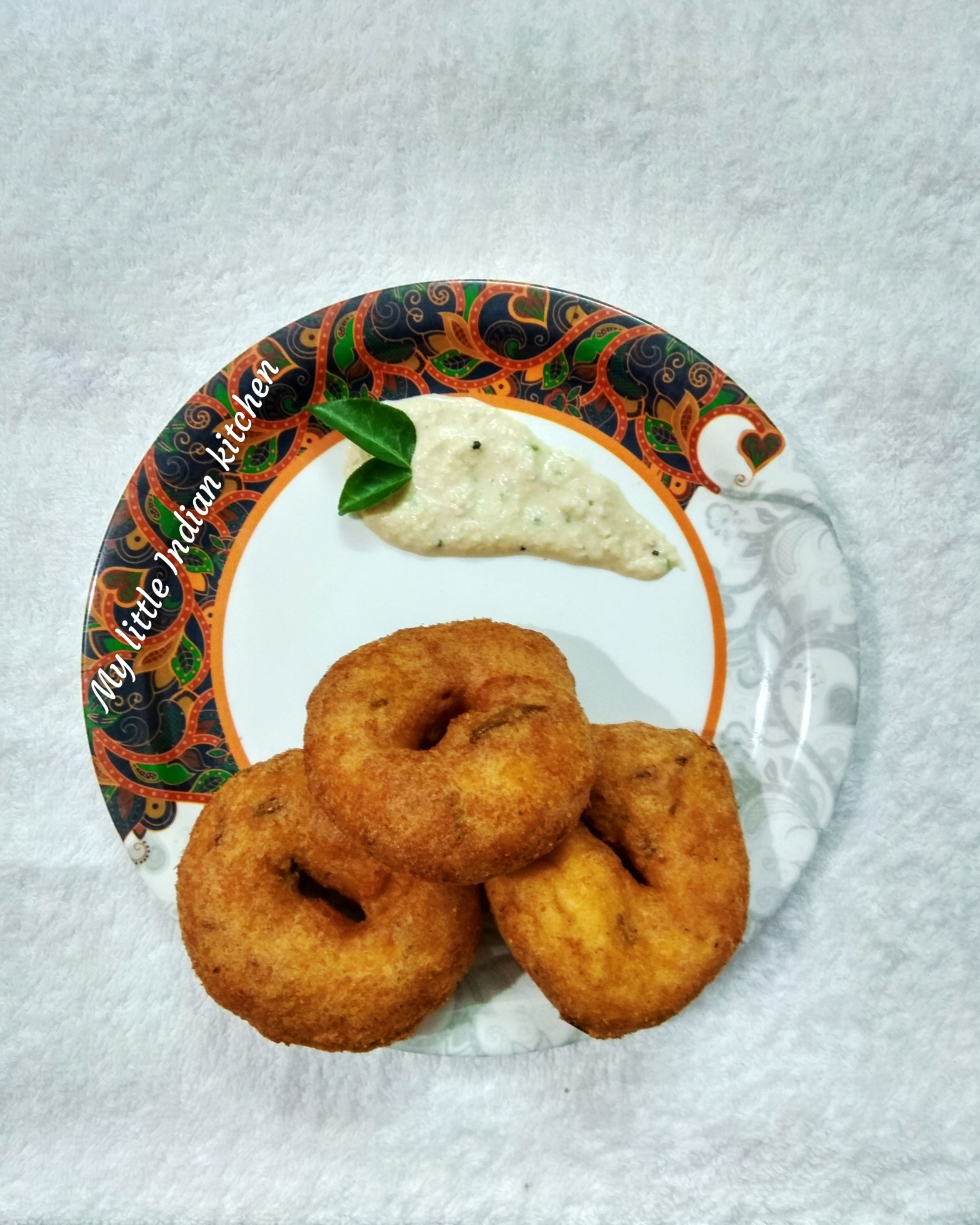
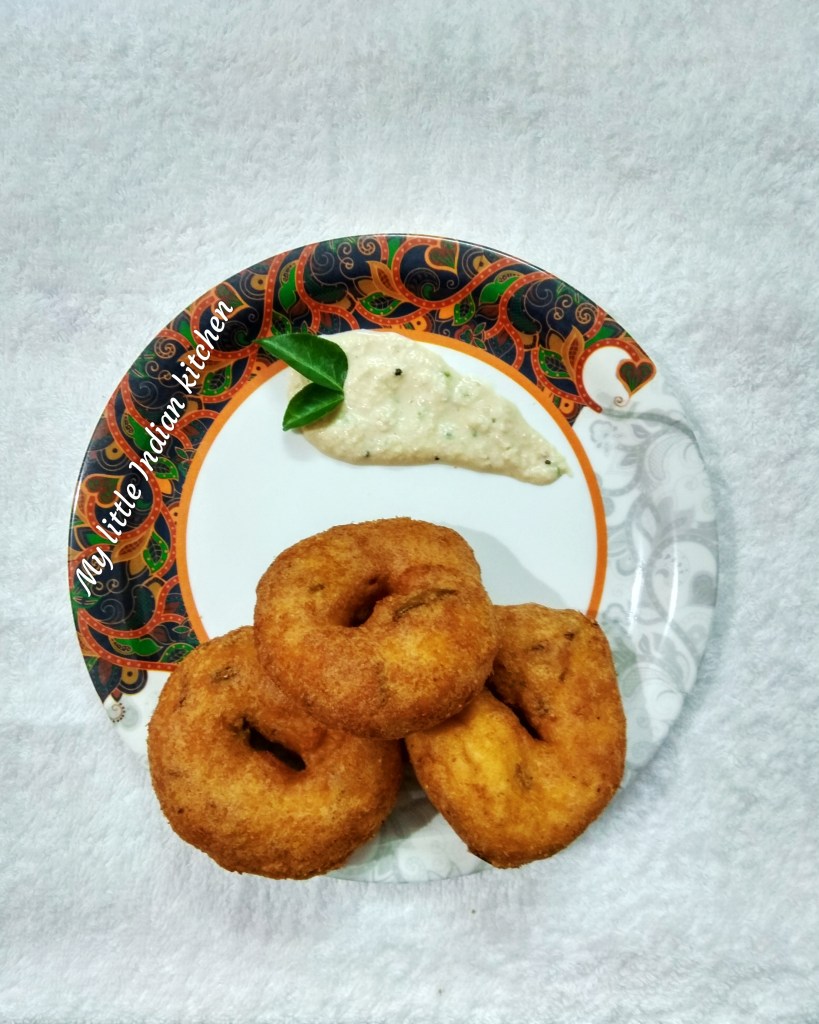
Uzhunnu vada | Medu vada | Vada

Uzhunnu vada or vada is a deep fried savory snack made of lentils. Vada is the most popular food in south India served for breakfast or as a snack. Usually they are made by soaking and grinding urad dal then small portions of this batter is deep fried into round shaped. Apart from coconut chutney, these also taste great when paired with sambar (mixed lentil and vegetable curry).

Ingredients

  • 1.5 cups whole urad dal
  • 2 tbsp rice flour
  • 1 large green chili, finely chopped
  • 1″ ginger, finely chopped
  • 1 spring curry leaves, chopped
  • 1 tsp black pepper corn
  • A pinch baking soda
  • Salt to taste
  • Water

Method

  • Soak urad dal for at least 2 hours. Drain. Grind urad dal (grind in batches if needed) into smooth paste. Add a little water if needed. Transfer batter to a large bowl.
  • Add rice flour, onions, chilies, ginger and baking soda and salt. Mix well. Cover and set aside for 15 minutes. Meanwhile, Heat oil for deep frying in a large frying pan.
  • Wet your hands with a little water. Take 2 tbsp of batter , and shape into a ball. Flatten slightly. Using the index finger of the other hand, make a hole in the middle of the vada.
  • Slide vada into the hot oil. Depending on the size of the pan, you can fry 4-5 vadas at a time. Remember not to overcrowd the pan. Flip the vadas occasionally, and fry for 3-4 minutes or until they are golden on both sides. Drain onto a paper towel.
  • Serve warm with coconut chutney or sambar.
Design a site like this with WordPress.com
Get started